Why Cold-Brewed Tea Barely Turns Bitter
Cold water is far slower than hot water to pull tannins out of a tea leaf. Steep loose leaf too long in a hot mug and the cup turns sharp and drying. There is one way to brew it that does the opposite.
Leave loose leaf in cold water overnight and almost no bitterness is waiting in the morning, only a rounder, sweeter cup than the same leaves give up to hot water. Part of the reason is chemistry. Part of it is a tradition: cold botanical drinks like agua de jamaica, served over ice long before anyone printed the words cold brew on a menu.
What heat pulls out of the leaf first
Steeping is really a question of what dissolves, and when. Warm water is a fast, indiscriminate solvent, and among the very first things it draws out of a tea leaf are tannins, the astringent polyphenols that give a strong cup its brisk, drying grip. Make the water hotter or the steep longer and more of them arrive, quickly. It is why an over-brewed mug turns sharp, and why green tea in particular turns bitter with water straight off the boil.
Cold water works on a different clock. Tea chemists put it roughly this way: the cooler the water, the slower and choosier the extraction. The sweeter, more aromatic compounds come out first, and the astringent ones are far slower to follow. Give a jar eight or twelve hours in the fridge and cold water will build a full, fragrant cup while barely touching the compounds that make hot tea turn bitter. No heat, barely any bitterness. Because those astringent compounds extract so slowly, the timing is hard to get wrong.
A jar, cold water, and a night
There is no equipment to buy and no temperature to hit. Our ratio is about 50 grams of loose leaf to roughly six cups of cold water, a little more leaf than you would use hot, because cold extraction is slow and you are handing it a longer, gentler job. Combine the two in a jar, cover it, and leave it in the refrigerator overnight. In the morning, strain the leaves out and pour over ice.
Timing is the one place the blends differ, and it comes down to whether there is real tea leaf in the jar:
- Daybreak, built on Cusco green tea, pulls fastest and is best strained by morning; green tea is the one leaf that turns tannic even in the cold, so give it eight to ten hours and no longer.
- Rooted and Dusk settle in at around twelve hours.
- Gather, all fruit and flower with no tea leaf at all, can sit a full twenty-four hours and cannot really oversteep. It only deepens.
The full brewing guide keeps the hot numbers alongside these, if you want both. One difference from a hot cup: cold water will not dissolve sugar the way heat does, so cold brew is sweetened in the glass, not the pot. A spoon of chancaca, the unrefined Peruvian cane sugar, stirs in dark and molasses-edged; a little monkfruit sweetens without the sugar. Both are optional, and most of these brews carry enough of their own fruit to skip it.
Latin America never called it a trend
None of this is new. Long before cold brew became a coffee-shop line item, agua de jamaica already sat in a big glass jar on countless Mexican tables.
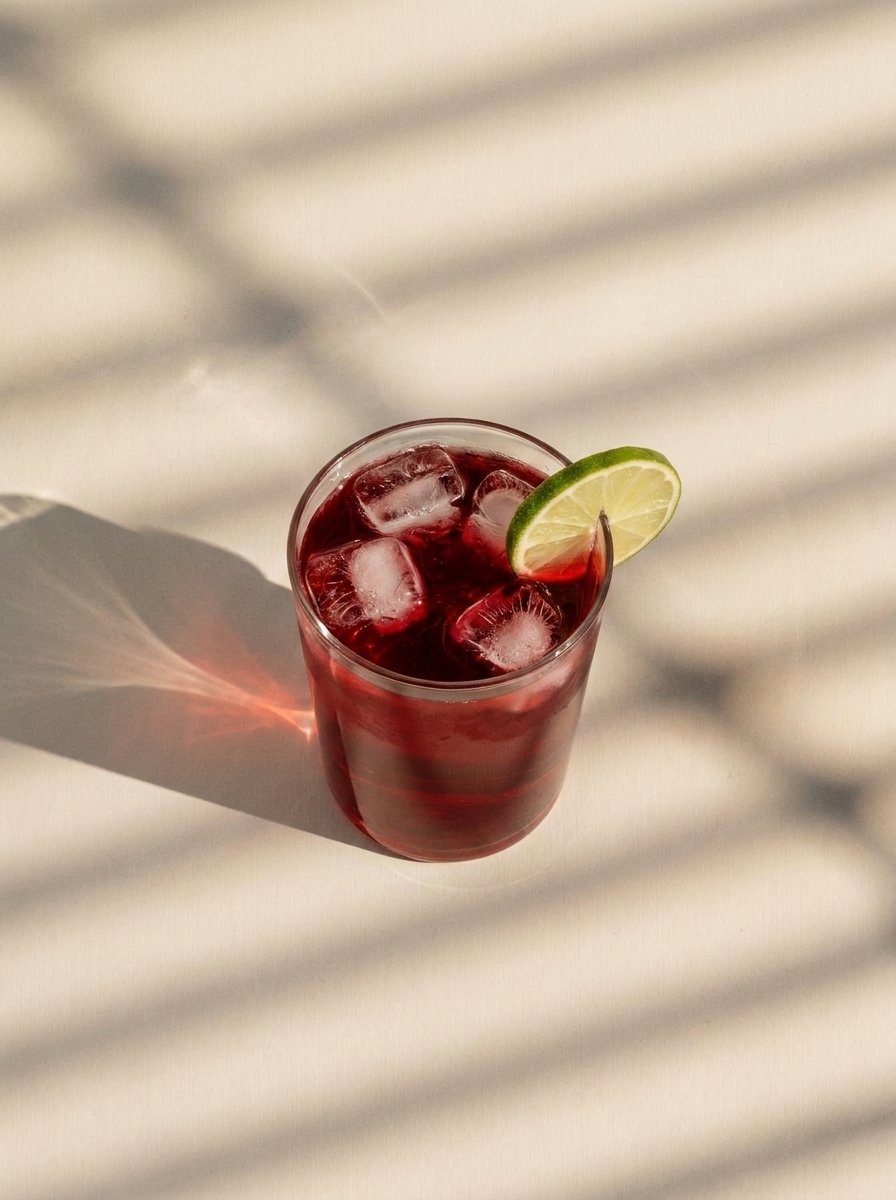
Jamaica, pronounced ha-MY-ca, is dried hibiscus, the same flower, roselle, that turns a cup deep red. By most accounts the calyces are steeped, sweetened, chilled, and poured over ice into a tart, cranberry-bright agua fresca that stands beside horchata and tamarindo at street stands and family lunches across Mexico and Central America. The particulars shift house to house: some steep the flower hot and chill it, others let it sit cold. But the instinct is exactly a cold-brew jar's. A botanical, water, time, and a cold glass at the end of a warm afternoon.
The trend caught up to a menjunje that was already on the table.
The blend built for the glass
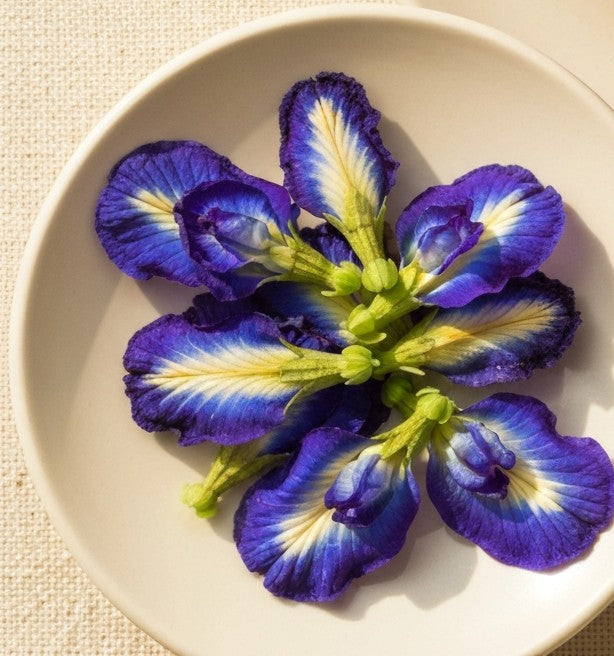
If one of our four was made for ice, it is Gather. It pours a deep berry red, drawn from hibiscus and camu camu, cranberry, blueberry, strawberry, and Amazonian vanilla, with butterfly pea flower rounding out the roster. Sweet-tart and silky, caffeine-free, it is the blend we reach for when people are over. Cold brew it overnight, or make it double strength and pour it straight over ice; either way it holds its color and its fruit.
The other three cold-brew just as well. A jar of each, cold in the fridge: the morning blend, the after-meal one, the evening cup, and the one for company.
Fill a jar with 50 grams of loose leaf and about six cups of cold water, leave it overnight in the fridge, and strain over ice the next morning.
Menjunjes
The extraction chemistry follows standard brewing references and tea-science studies; the agua de jamaica passage rests on Mexican home cooking.
Photograph by Menjunjes.