What Is Muña? The Wild Mint of the Andes
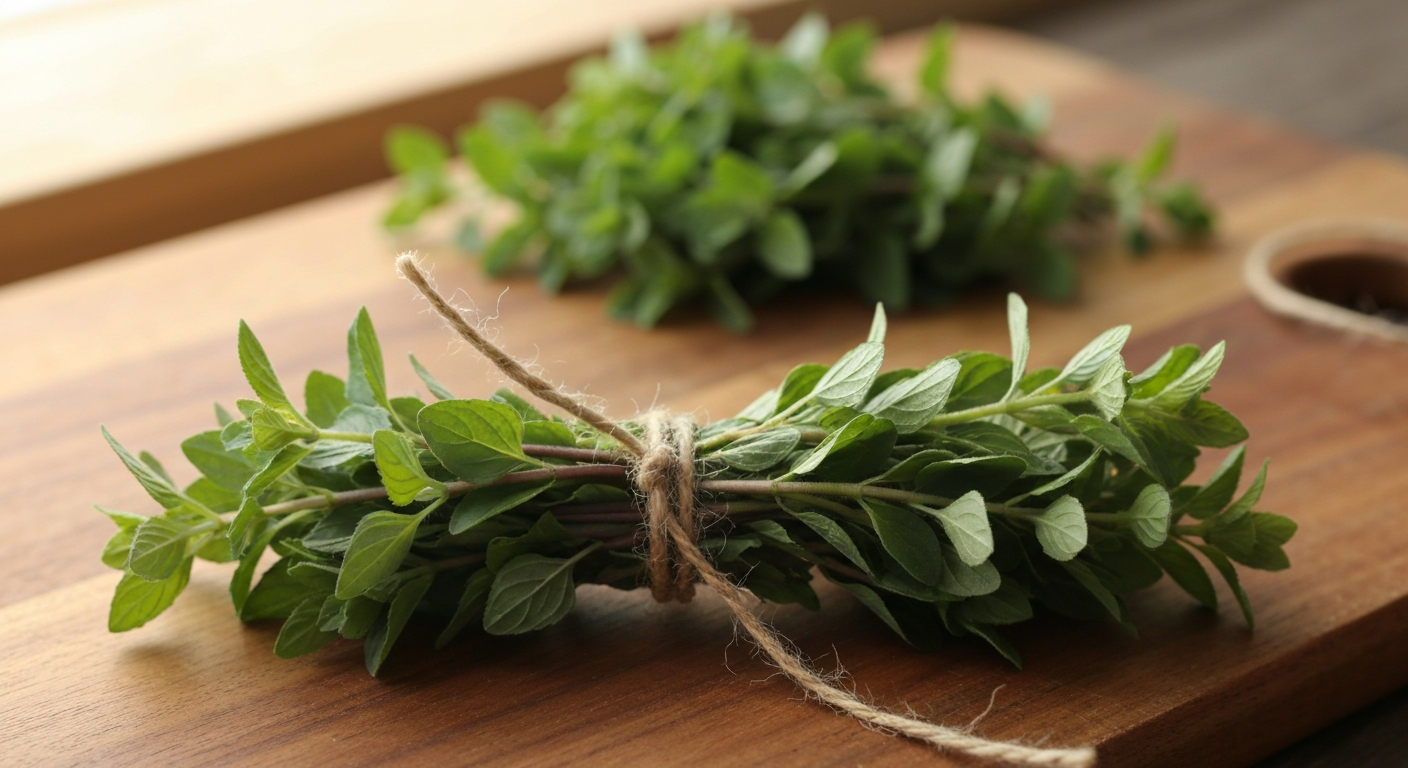
In the produce markets of the Peruvian highlands, one herb sells the way the corner store sells parsley: in tied bundles, fresh or dried, by the handful. Ask what it is for and the answer usually points at the kettle. The herb is muña, and if you have ever eaten in the Andes, you have probably met it without learning its name.
The plant
Muña is a wild mint of the Andes, and the word itself is Quechua; it never needed translating. Botanists place the plant in the genus Minthostachys. The Peruvian herb is usually identified as Minthostachys mollis or the closely related M. setosa, and the species boundaries are debated enough that this piece stays at the genus. What matters at the table is that muña is a true mint, but not the one Americans grow in pots. Peppermint and spearmint belong to Mentha, a different branch of the family, and the difference is obvious the moment you crush a leaf.
It grows high. Botanical references generally put muña between roughly 2,000 and 3,500 meters, on rocky slopes and along riverbeds across Peru, Bolivia, and parts of Ecuador, too high for garden mint. The flavor carries that altitude: sharper and cooler than the mint you know, with a clean, faintly camphorous, eucalyptus-like edge. It is less a stand-in for garden mint than a plant with its own register, closer to high mountain scrub than to anything in a mojito.
The after-meal cup
Mate de muña is what most of those bundles become: the traditional after-meal tea of the highland kitchen, the one that follows a heavy lunch. There is no ceremony to it. A sprig goes into hot water and sits while the table talks. Across Peru and Bolivia it has held that place, present and unremarked-upon.
The plant works beyond the teapot, too. Ethnobotanical surveys of the region record muña laid among stored potatoes in highland farmhouses, and accounts of pachamanca, the Andean earth-oven feast, often list it among the herbs layered over the meat.
Rooted, our caffeine-free after-meal blend, lives in this same tradition. It is built on plants of the Andean table: boldo, black mint, ginger, turmeric. Muña is not in the pouch. But it shares the after-meal occasion.
Muña is not black mint
Black mint (menta negra) is a different Andean kitchen herb, and it is the mint we blend into Rooted. Muña is its own plant, with its own history and its own place at the table. The two share a country and a habit of turning up after lunch; they do not share an identity. If a menu or a market stall renders either one simply as "mint," the word is doing too much work.
A word for it
If it is the habit you are after rather than the botany, that is what Rooted was blended for, and the Discovery Box sets the after-meal cup beside the other three blends in sampler size.
And if you have ever had Andean food and noticed a tea arrive after the meal that was not quite mint, was not quite anything you could name, there is a good chance it was muña.
Range and use here follow published Andean floras and highland ethnobotanical surveys.
Menjunjes