Emoliente: The Dawn Brew Peru Wrote Into Law
Before Lima's cafés open, the city has already had its first hot cup, poured on a street corner from a steel urn. What emoliente is, and why Peru gave its street brewers a law of their own.
Long before the cafés open, Lima has already had its first hot drink of the day. It comes from a cart.
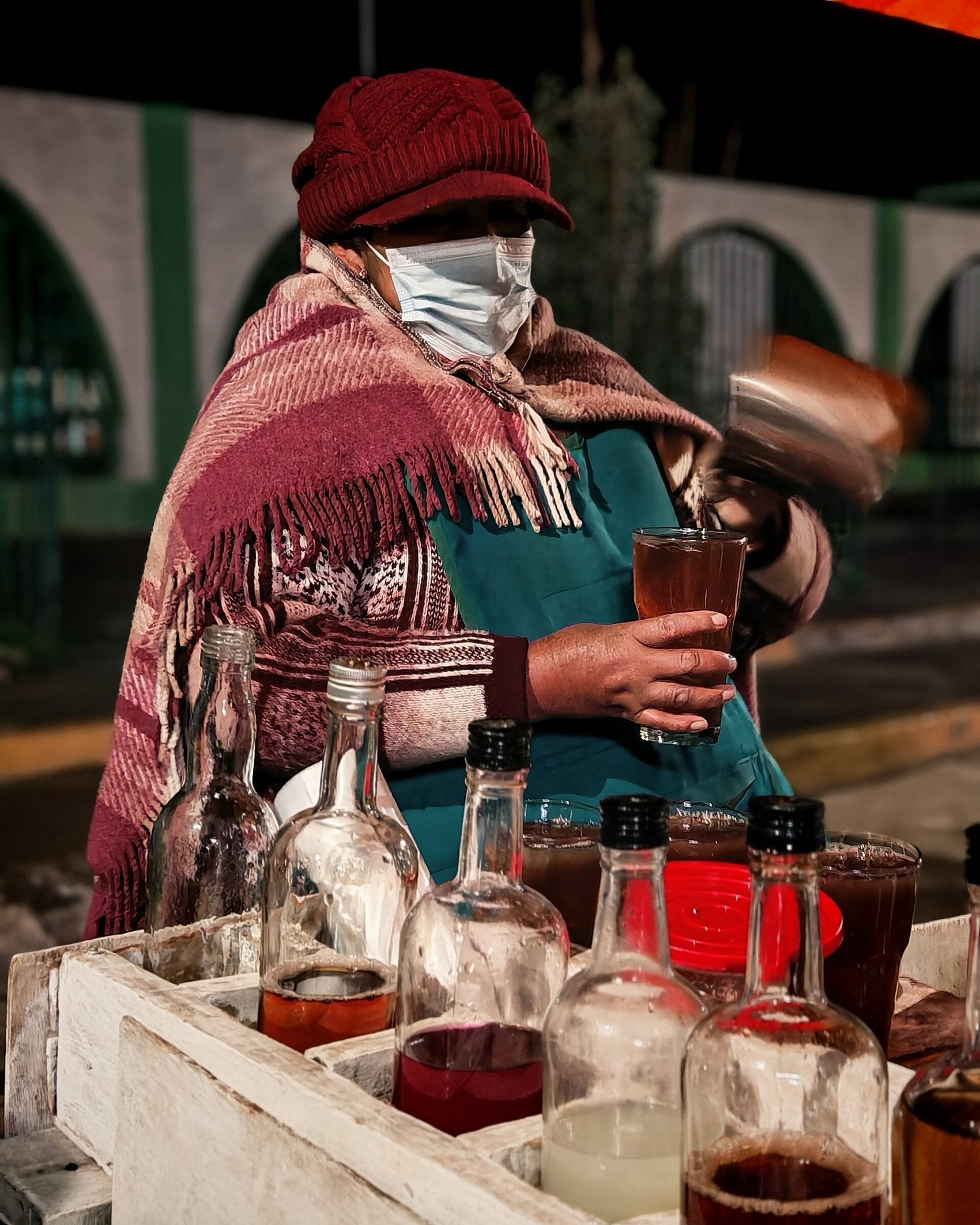
Roll into almost any working neighborhood before six in the morning and the emolientero is already at his post: a small wheeled cart, a tall steel urn breathing steam into the cold, and a row of glass bottles along the top, each holding a dark, macerated herb. He works quickly, because his customers are on their way to somewhere. A splash from this bottle, a spoonful from that one, a squeeze of lime, and the drink goes out in a long pour from pot to cup, cooled to drinking temperature in a single practiced ribbon. This is emoliente, and for a great many Peruvians it is simply the taste of getting up.
What's in the cup
Strip emoliente down to its foundation and it is barley water. Toasted barley grains, simmered until the water turns the color of weak tea and takes on a toasty, faintly sweet body; then flaxseed, which lends the soft, just-thickened slip the drink is named for. Emoliente comes from a Latin word for softening, and it is the flaxseed you are tasting when that name finally makes sense.
Everything after that is the herbs, and this is where no two emolienteros are quite alike. The bottles on the cart hold macerated extracts: horsetail, alfalfa, plantain leaf, and boldo among the usual ones, dosed by eye and by request. A little sugar or honey and that squeeze of lime close it out. Ask what any single herb is for and the vendor will tell you, confident and specific; ask the next cart and the answer may change. Those explanations belong to the emolienteros and to a long oral tradition, and that is where they read best. What travels without any of it is the cup itself: toasted grain, green herb, a citrus edge, warm and a little thick, the kind of drink your hands are glad to hold.
It started in the pharmacy
Emoliente did not begin on the street. By most accounts it began indoors, in the colonial pharmacy, as one of the herbal waters that druggists mixed and sold by the glass, a Spanish habit with older Arabic roots, poured now over Andean herbs the newcomers had never seen. Sometime in the nineteenth century it left the counter for the corner. Vendors began carrying it through Lima in copper pots, calling it out to laborers on their way to work, and it stayed.
The trade organized early. As the histories tell it, Lima's emolienteros formed their first society in 1927, with the help of the city's Japanese immigrant community, who were then a visible part of the street-food economy and took readily to the pre-dawn rounds. By the middle of the twentieth century there was, more or less, an emolientero on every busy corner. The drink had become infrastructure.
The law with a vendor in its name
Emoliente has a law. In 2014, Peru's Congress passed Ley 30198, the Ley del Emolientero, or emoliente-seller's law. Its text and date are in the published congressional record. It does not police a recipe or hand out a protected name the way France guards a cheese. It does something more human. It recognizes the men and women who prepare and sell herb-based drinks on the public street as legitimate microenterprises, self-employment formally counted, and it sets February 20 as a national day for emoliente and the other traditional botanical drinks that ride the same cart, among them quinua, maca, and kiwicha.
The drink began as a pharmacy remedy and became a livelihood for more than a hundred thousand people, by the counts usually cited.
Why a tea company is telling you this
Emoliente belongs to the cart and the corner, to the emolientero who has been at his post since before the city woke.
What we recognize in it is a habit with a name in Peru: reaching for a handmade brew of herbs at a particular hour of the day. A menjunje is a concoction, a homemade botanical brew, the kind a home cook mixes by eye. Emoliente is one of these, poured from a cart at dawn.
There is even an ingredient in common. Boldo, the fragrant leaf so many emolienteros reach for, is one of the seven botanicals in our Rooted, the caffeine-free blend made for after a meal.
Peru turns out to be full of these surprises. It grows green and black tea, too, a hundred-year story we've told elsewhere. If you want to meet our four blends the way most people first do, the Discovery Box holds four small pouches, one for each part of the day. None of them is emoliente.
Menjunjes
Photograph of an emoliente vendor by Abelchristian111, via Wikimedia Commons (CC BY-SA 4.0).