Peru Grows Tea. The Story Starts Below Cusco.
Tea grows around Huyro and Huayopata, where the Cusco region drops toward the Amazon. Its history includes a disputed 1913 ship story, unpaid estate labor, peasant unions, cooperatives, crisis, and a small modern revival.
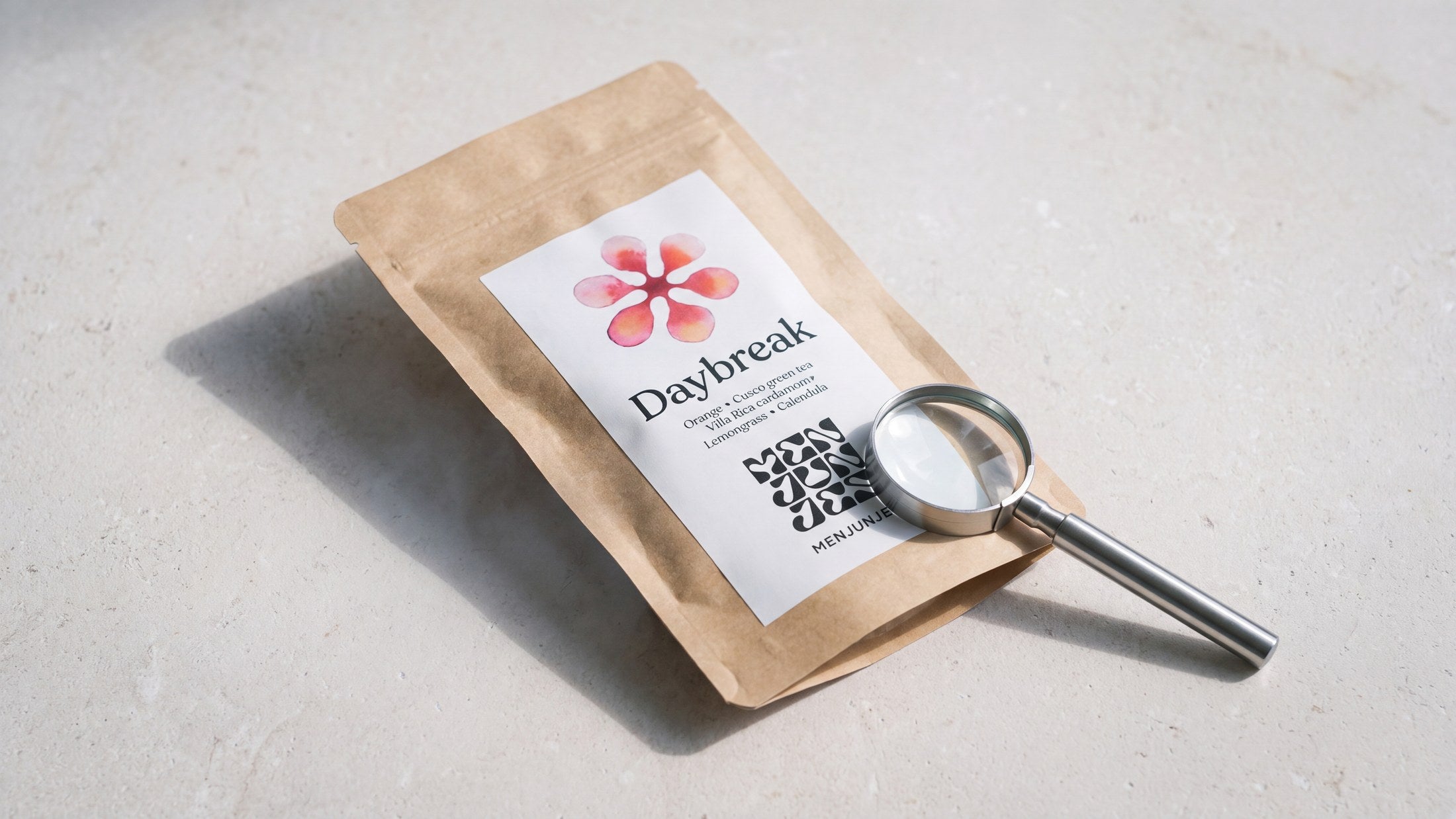
If there is a pouch of Daybreak nearby, turn it over. "Cusco green tea" is an ingredient, not a mood. Camellia sinensis grows around Huyro and Huayopata in the province of La Convención, where the Cusco region drops toward the Amazon.
The crop has been there for roughly a century. Its history is less tidy than the label: a disputed ship story, tea estates built on unpaid labor, peasant unions, cooperatives, a crisis, and a small revival that is starting to win awards.
Where Cusco turns warm
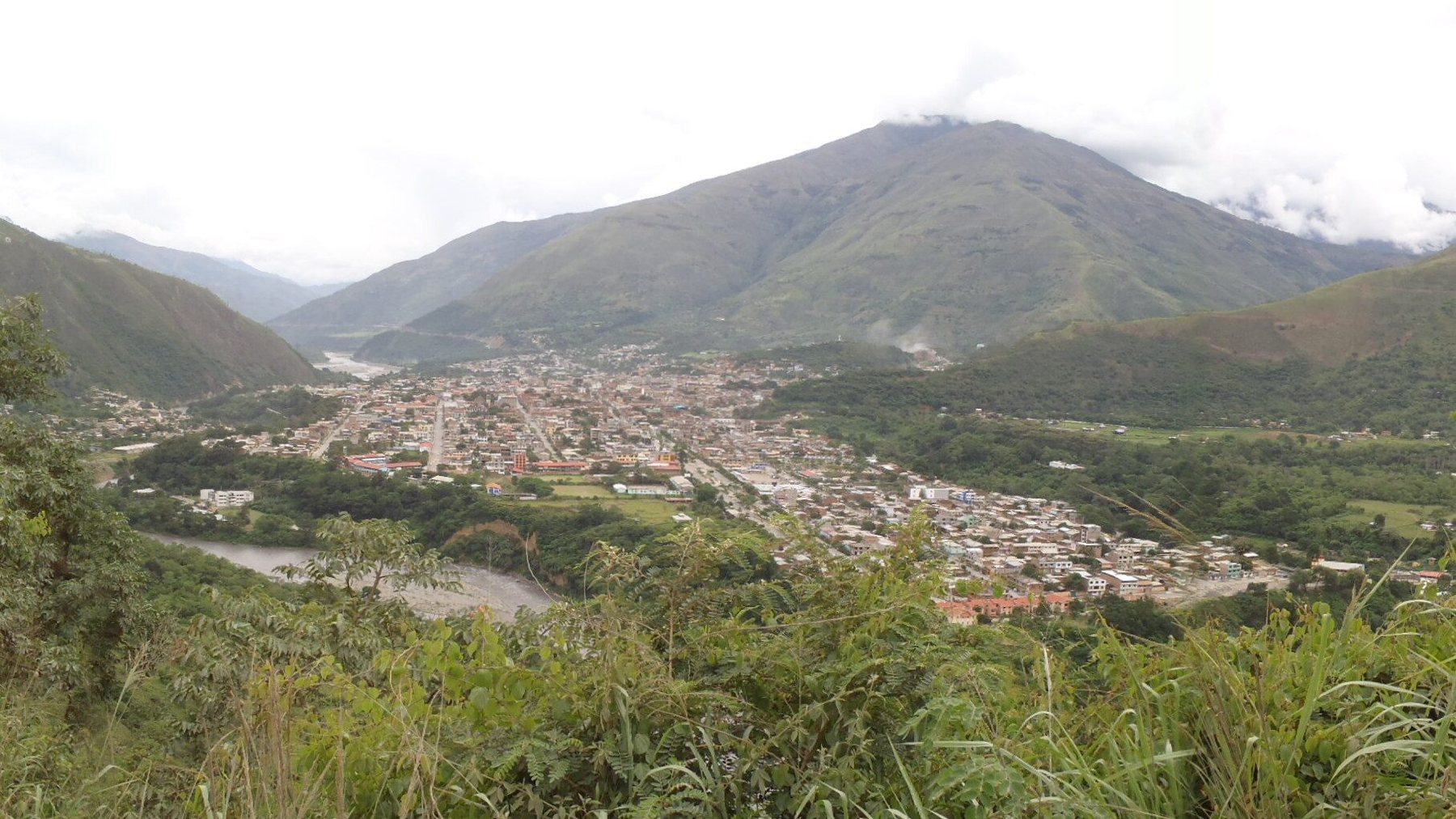
The Cusco most people can picture is the high city: stone streets at 3,400 meters, thin air, cold nights. Nothing about that landscape suits tea, and none grows there. But the region does not end at the mountains. East of the city the Andes fall away through the ceja de selva, the "eyebrow of the jungle," a belt of steep green country where the peaks dissolve toward the Amazon basin. In La Convención the altitude eases to roughly 1,400 to 2,200 meters, the rain becomes steady, and the slopes stay green the year round under near-permanent cloud.
That is what Camellia sinensis asks for. The place names to know are small ones: Huyro, Huayopata, Amaybamba. They appear on few maps, and they are where Peru grows much of its tea.

The 1913 ship story, with an asterisk
Local and trade histories credit Benjamín de la Torre Mar with the first planting, at a hacienda called Huyro. A longstanding version of the story says Francisco A. Loayza, Peru's consul in Yokohama, arranged for Japanese tea seed to cross the Pacific aboard a steamship called the Anyo Maru, bound for the port of Callao and then up into the valley.
The ship was real: a Japanese liner that ran the route between Japan and South America's Pacific coast in those years. The seed shipment is the soft part. No confirming manifest has surfaced in the sources we can check, and the accounts that repeat the story appear to trace back to a shared telling. It has hardened into accepted history through repetition, so we tell it the way Peru tells it and note where the documentation thins.
What is not in doubt is the result: the seed took, and the experiment held.

Five trainers from Ceylon
A stand of seedlings in a remote valley is not an industry. In 1927, a Supreme Resolution authorized five tea specialists from Ceylon, the island now called Sri Lanka, to advise on cultivation. Large-scale planting followed in La Convención in 1928, and for most of the century that followed, black tea was the tea the valley sold.
(A correction worth repeating, since bigger numbers circulate online: the country's first large black-tea factory, and early plant counts in the hundreds of thousands, belong to Huánuco, a different tea region well to the north. Cusco's industry was real, but more modest than the legend.)
The rent was unpaid labor
The gardens did not run on goodwill. Through the middle of the twentieth century, La Convención's estates worked on a tenancy system with two tiers. Arrendires rented plots from the estate owners and paid much of the rent in labor: days of unpaid work owed each month, on the landowner's tea, on the landowner's terms. Allegados generally held smaller or more marginal plots through the arrendires, and owed labor again inside that hierarchy.
In plain language, families worked another man's tea, on land they could not own, to earn the right to grow their own food.
The unions changed the valley
Peasant organizing in La Convención did not begin with one famous man. The valley's first peasant union formed at Maranura in 1947; the provincial federation followed in 1958. Hugo Blanco became the movement's best-known figure, and for a time the federation he led ran a kind of parallel authority in the valley. But the organizing was broader than any leader: women including Carmela Giraldo and María Luisa Canal built marches, strikes, and land actions of their own.
The pressure told. Unrest in La Convención helped force an early, local land reform in the first years of the 1960s, ahead of the sweeping national reform General Juan Velasco Alvarado decreed in 1969.

Estates became cooperatives
Across those years the great estates were broken up. The tea gardens, and the factories that processed their leaf, passed to cooperatives of the families who had always worked them; by 1970, the Huyro and Amaybamba operations were reorganized under a central cooperative of growers.
Reform changed who held the land and the factories. It did not make the new system simple or equal. The cooperative structure held separate tiers of members, employees, and factory workers, and the factory workers did not necessarily share in member profits or benefits. Ownership had moved; the hierarchy, in softer form, remained.
What broke after 2003
For decades the cooperative system carried on, and for a while it grew. Huayopata's reported output reached 8,750 tonnes in 1997, in a production series compiled by a 2024 thesis at Cusco's national university, UNSAAC.
Underneath, familiar problems were eroding it: cheap imported tea after the market opened, aging equipment, financing gaps, weak management. By 2003 the central cooperative was in administrative and economic crisis, and reported production fell sharply the following year, to 555 tonnes. Growers did the rational thing and replanted much of the land in coffee, cacao, and fruit.
Call it a severe contraction and the collapse of a cooperative, not the death of a crop. The same series still records 1,850 cultivated hectares and 952 tonnes of tea in 2021. The bushes, many of them decades deep in the soil, mostly stayed.

Four Cusco teas, four awards
Small producers have gone back into the old gardens with different ambitions: green, white, and more careful black teas, made in small batches. It is a revival, not yet a recovery.
In 2023 it produced a measurable result. At the AVPA "Teas of the World" competition in Paris, four Cusco teas won recognition: a gold for Inkaterra's Asanica, grown in Urubamba; a silver for Machu Picchu Tea Company's white tea from Huayopata; and gourmet diplomas for the Amaybamba-Pistipata cooperative and for Miguel Ángel Chura Toledo's Alfamayo black tea, both in La Convención. Three of the four came from the valley this story has been about.
Cusco tea in Daybreak and Dusk
Daybreak contains Cusco green tea. Dusk contains Cusco black tea. Brew them side by side: cardamom and citrus bring Daybreak forward; apple, lavender, and vanilla soften Dusk. Two different blends, built around a crop many tea drinkers still do not know Peru grows. The brewing guide has the doses and times.

Notes and sources
The production series, the 1997 peak, the cooperative's 2003 crisis, the 2004 fall to 555 tonnes, the 2021 figures, and the tiered cooperative structure come from a 2024 UNSAAC thesis on tea production and the Té Huyro cooperative. The 1927 authorization of five Ceylon specialists and the 1928 expansion appear in a Peruvian congressional history. The Maranura union of 1947, the 1958 federation, and the record of women's organizing come from the Journal of Latin American Studies. The 2023 results are per PROMPERÚ and the official AVPA results.
The 1913 origin (Benjamín de la Torre, Consul Loayza, the Anyo Maru) reaches us through tea-trade histories and producer accounts that largely share one lineage; we tell it as the accepted account rather than a manifest-proven fact. A few widely repeated figures (an early "first factory," large plant counts) belong to Peru's other tea region, Huánuco, and we have kept them out.