Peruvian Cardamom: The Cloud-Forest Spice in Daybreak
Most of the world's cardamom comes from two places: southern India, where the plant is native, and highland Guatemala, which now grows more of it than anywhere else. Nearly every pod on a spice shelf traces back to one or the other.
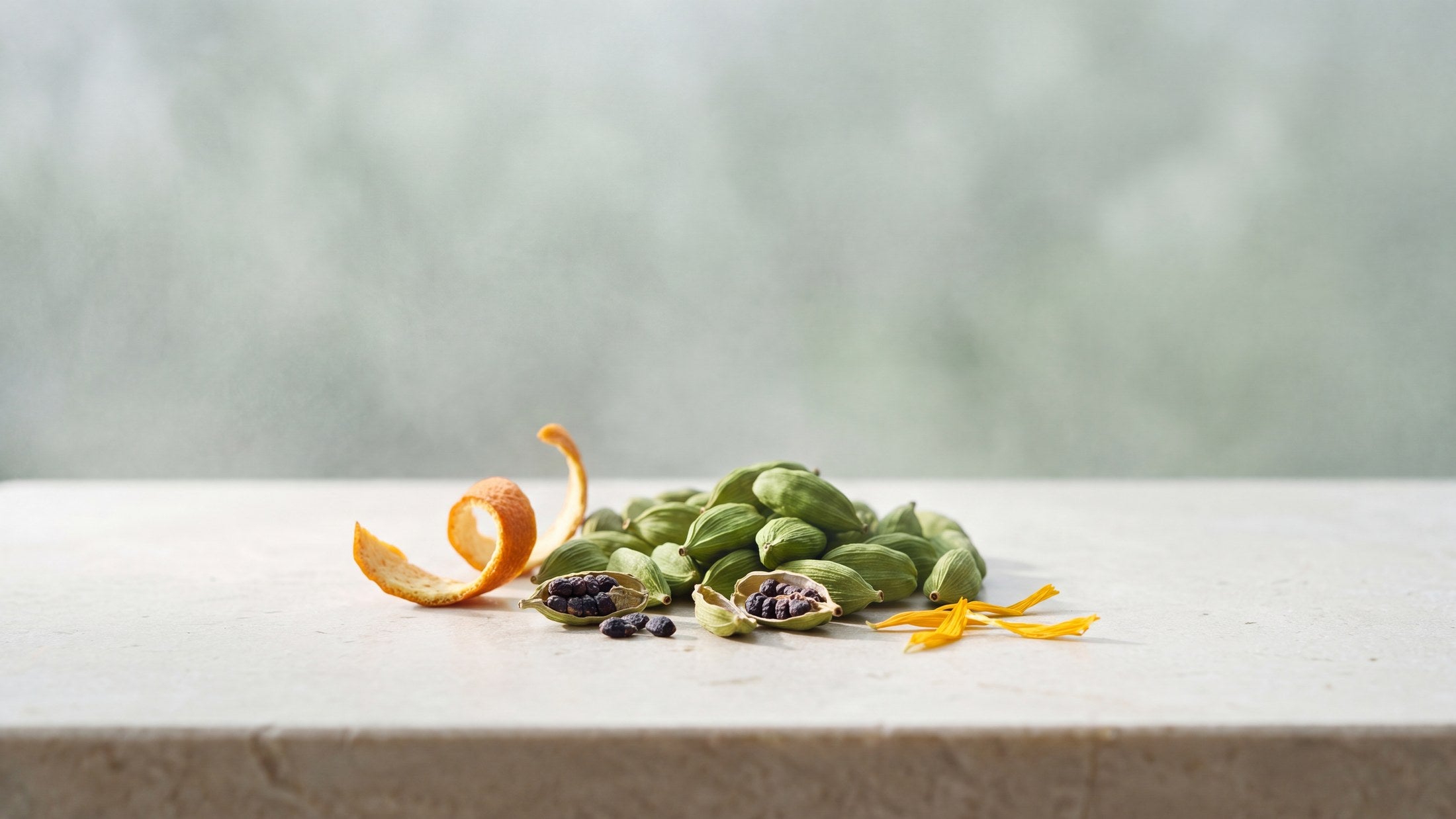
Which is what makes the origin line on Daybreak, our morning blend, worth a second look: Villa Rica cardamom, from a small coffee-country town in Oxapampa province, in Peru's central high jungle. The pods are small. The aroma is sharp and resinous, with a bright top note that announces itself before the water hits.
Where it comes from
Villa Rica sits in the selva central, the belt of cloud forest where the eastern Andes begin their long fall toward the Amazon basin. Fog wraps the town more mornings than not. Rainfall is generous, the slopes are warm and shaded, and the air rarely dries out. Peruvians know the place for one crop above all others: this is coffee country, and the town's name still travels on its coffee.
The people are part of the story. As the region's histories tell it, Austro-German colonists settled the nearby valley of Pozuzo in the mid-1800s, and it was their descendants who pushed on and founded Villa Rica in the 1920s. What they planted was coffee.
Cardamom is a newer arrival. In recent years, local growers have added it under the coffee canopy, where the same altitude and cloud-forest climate suit the pod. Peruvian cardamom remains a modest crop, raised by a handful of small producers, most of them coffee farmers first. The spice trade keeps a rule of thumb that cool nights and slow growth leave more aromatic oil in the pod; rule of thumb or not, what comes out of these hills is layered: eucalyptus, pine, a faint citrus warmth.
What Peruvian cardamom tastes like
Crack a Villa Rica pod between your fingers and the first thing you notice is the scent — bright, almost mentholated, with a sweetness underneath that takes a moment to arrive. It is unmistakably cardamom, with the top notes turned up.
In a cup, it reads as warmth without heaviness. There is a resinous quality, like stepping into a forest after rain, followed by a clean finish that lifts rather than lingers. It pairs naturally with green tea because both share that quality of being complex without being dense; they stay light in the cup.
If you've tasted Indian green cardamom, the kind used in masala chai, Villa Rica's version will feel familiar but distinctly itself. Less sweet, more aromatic, with a brightness that belongs to its particular altitude and air. It is the same species, grown in a different place.
The tradition behind it
Cardamom has been traded for at least a thousand years. It appears in Ayurvedic texts and medieval Arabic cookbooks; traders moved it up the Red Sea, and the Vikings are often credited, a little too neatly, with bringing it north to Scandinavia, where it still fills the braided buns of every good bakery. Few spices have been taken so far from home, or made so welcome once they arrived.
In Peru, the story is newer and much smaller. Cardamom is not a centuries-old heritage crop in these valleys; no colonial chronicle mentions it here. When Peruvian agricultural reporters profile the crop, the growers they interview are coffee farmers diversifying a hillside, not heirs to a spice dynasty. Growers gave it rows because it grows well in the shade the coffee already casts, and because it sells.
It is the same reasoning behind a menjunje. The world of menjunjes, the homemade brews of Latin American kitchens, has always been practical rather than precious. Plants are known by what they do in the pot, not by their pedigree, and an ingredient holds its place because the brew is better with it.
Why it's in Daybreak
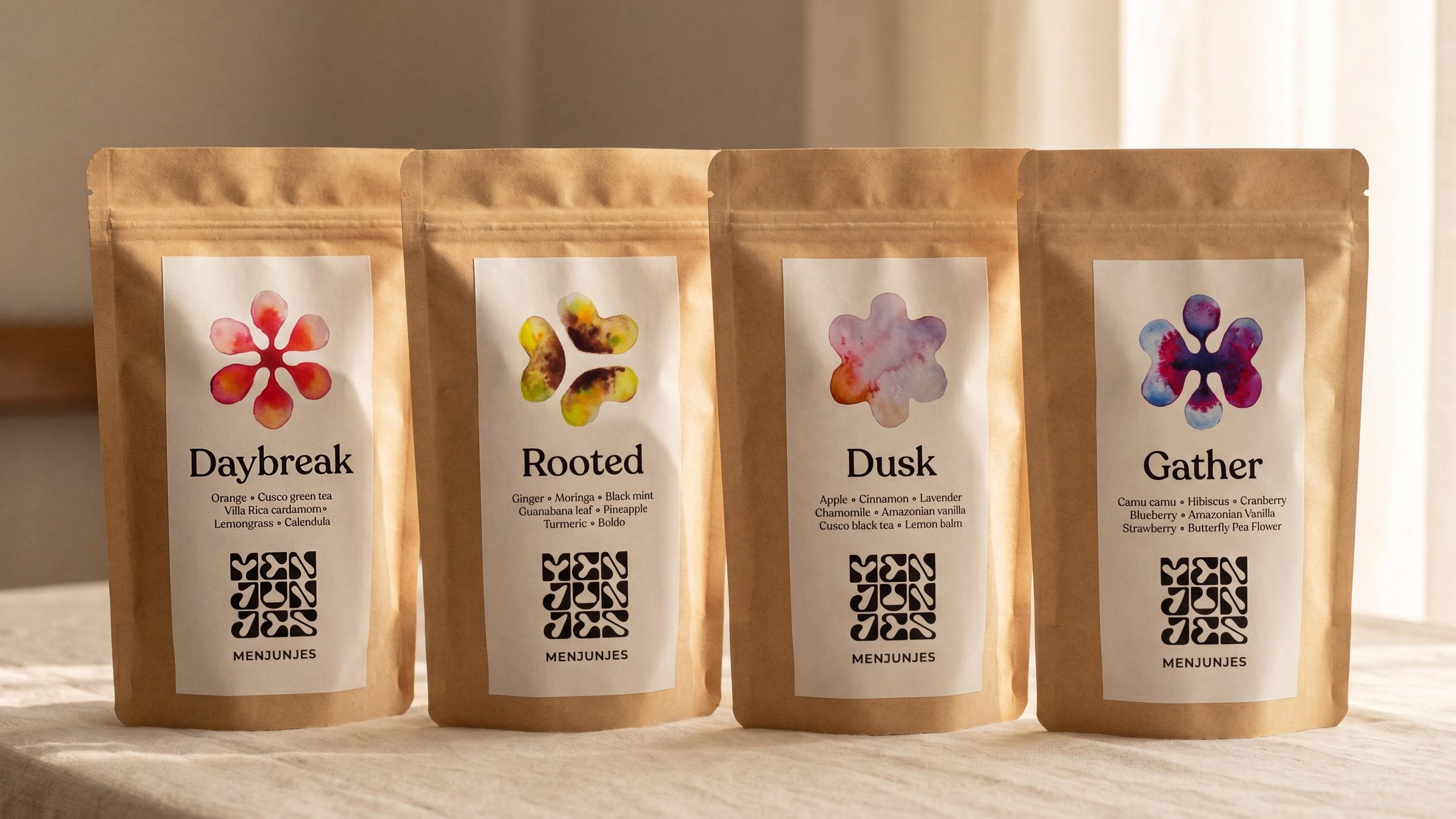
We built Daybreak around a plain question: what does a morning cup need to do? Caffeine is the easy part. That comes from Cusco green tea, a leaf with a hundred-year Peruvian story of its own. The harder part is character. The first sip of the day should open the palate rather than coat it, and cardamom's brightness sits exactly there, in the space between the warmth of the tea and the sharpness of the citrus, lifting the whole blend without overpowering it. Orange carries the citrus lead, lemongrass keeps it light, and calendula petals soften the edges. The green tea is the spine; the cardamom is what you remember.
Brewed well, Daybreak pours a light gold with a slight haze, and the haze is the cardamom itself. Look for a gentle sweetness set against the citrus, then a silky, long finish.
Brewing it so the cardamom shows up
Cardamom stays sweet through a long steep; the green tea beside it turns bitter if the water is too hot. Loose leaf has a reputation for being foolproof, but blends built on green or black tea are the exception, and bitterness buries the cardamom first. So: 10 grams for a large mug, about 300 milliliters. Bring the kettle to a boil, then let it rest for two to three minutes before you pour. Steep six to seven minutes, tasting at four. The full method for all four blends is in the brewing guide.
A 200-gram pouch of Daybreak is $32 and brews about twenty mugs at the full dose. If you would rather meet the cardamom alongside the other three blends first, the Discovery Box ($40) carries all four in 50-gram pouches.
Notes and sources.
The geography and settlement history of Oxapampa (Pozuzo's Austro-German colonization, Villa Rica's founding in the 1920s) come from Peruvian regional and municipal histories, which agree on the outline. Cardamom's presence around Villa Rica rests on recent Peruvian agricultural-press reporting on the province's small producers; it is a young crop. Cardamom's longer trade history is standard spice-trade record, hedged above where the record turns to legend. The tasting notes are from our panel, subjective.
Menjunjes